Gandanta Nakshatra: Sacred Knots of Karma
Understand gandanta nakshatra, the water fire junctions of Revati Ashwini, Ashlesha Magha and Jyeshtha Mula, with meaning and remedies.
In Vedic astrology, a gandanta nakshatra is not just a difficult birth placement. It is a sacred threshold, a point where one karmic pattern is ending and another is beginning. Gandanta literally suggests a knot, and in Jyotish this knot appears at the delicate junction where a water sign ends and the next fire sign begins. These are places of deep emotional memory, spiritual transition, and inner intensity. A gandanta birth can bring sensitivity, early life instability, or unusual depth, but it should never be judged with fear. Many such souls carry profound insight because they are born at the edge of transformation.
Gandanta Meaning in Vedic Astrology
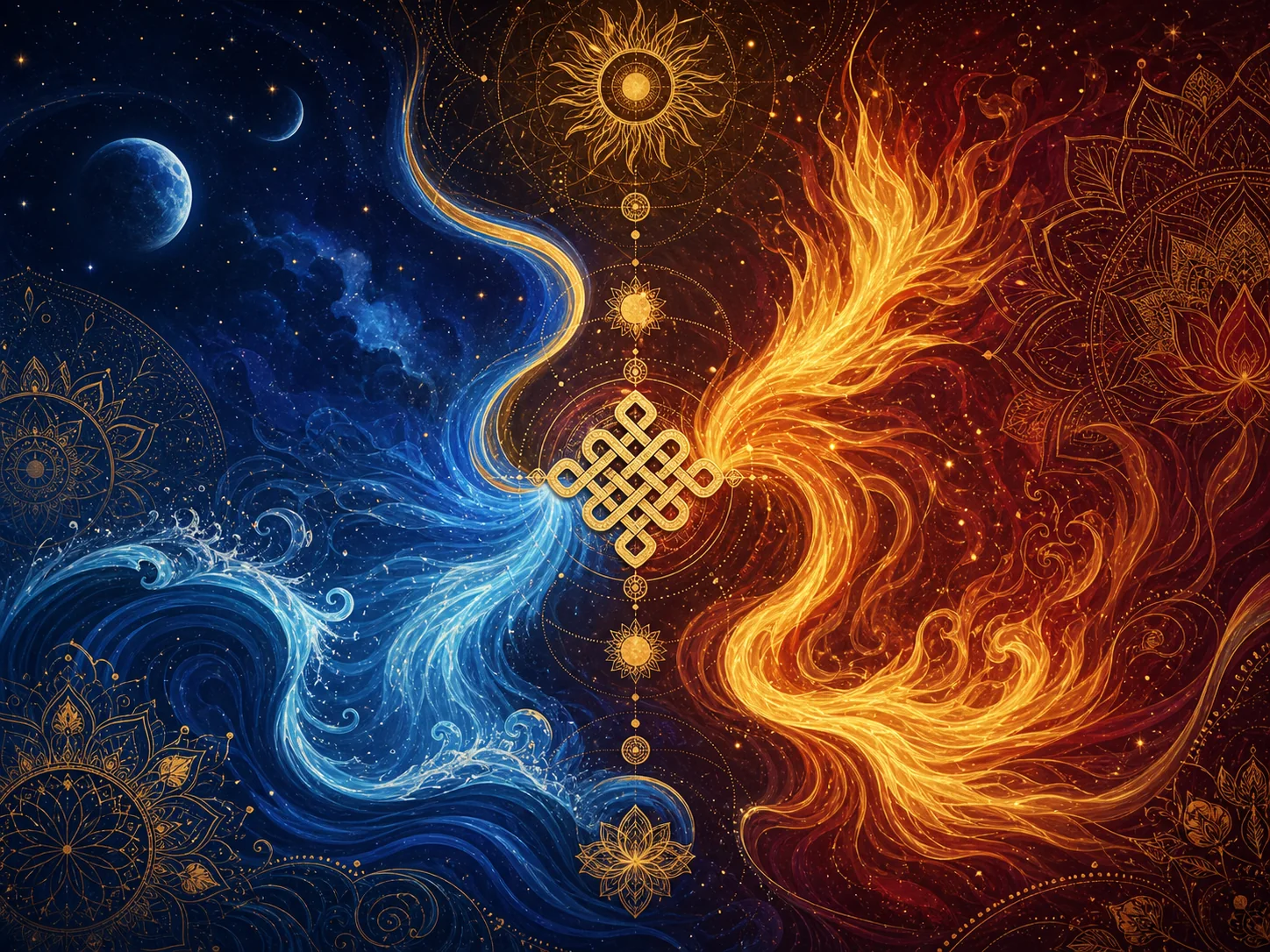
The word gandanta is commonly understood as a knot or difficult junction. In the zodiac, it occurs where water and fire signs meet. Water represents emotion, memory, protection, and dissolution. Fire represents action, identity, courage, and rebirth. When the Moon, lagna, or an important planet occupies this sensitive zone, the chart shows a transition from one psychological element to another.
Classically, gandanta is treated with caution, especially when the Moon or lagna is involved. The Moon governs the mind, emotions, early nourishment, and the mother. The lagna governs the body, vitality, and life path. Therefore, a gandanta Moon or gandanta lagna may show a soul entering life through a karmic knot that needs careful handling.
However, caution does not mean condemnation. Jyotish is not meant to frighten. It is meant to reveal timing, tendencies, remedies, and conscious choices. Gandanta shows a point of intensity. It does not cancel happiness, marriage, success, or spiritual growth.
The Three Water Fire Junctions
Gandanta occurs only at three zodiacal junctions. Each is formed by the last 3 deg 20 min of a water sign and the first 3 deg 20 min of the next fire sign. These zones correspond to the endings and beginnings of specific nakshatras.
| Gandanta Junction | Water Sign Ending | Fire Sign Beginning | Nakshatras Involved |
|---|---|---|---|
| Pisces to Aries | 26 deg 40 min to 30 deg Pisces | 0 to 3 deg 20 min Aries | Revati and Ashwini |
| Cancer to Leo | 26 deg 40 min to 30 deg Cancer | 0 to 3 deg 20 min Leo | Ashlesha and Magha |
| Scorpio to Sagittarius | 26 deg 40 min to 30 deg Scorpio | 0 to 3 deg 20 min Sagittarius | Jyeshtha and Mula |
These are not random points. Each one marks the closing of a watery emotional cycle and the ignition of a fiery new beginning. This is why the water fire junction is seen as spiritually charged.
Why Water and Fire Create a Karmic Knot
In Jyotish, water signs hold memory. Pisces holds the ocean of endings, Cancer holds emotional security and ancestry, and Scorpio holds hidden karma, fear, and transformation. Fire signs begin fresh movement. Aries begins identity, Leo begins royal self expression, and Sagittarius begins dharma and higher truth.
When water ends, something must be released. When fire begins, something must be born. Gandanta is the in between space. It is neither fully dissolved nor fully formed.
This can create inner experiences such as:
- Feeling different from an early age
- Strong emotional reactions without clear reason
- Deep attachment followed by sudden detachment
- Powerful intuition, dreams, or spiritual hunger
- Early family or health related sensitivity
- A lifelong search for meaning
This is why gandanta meaning should be understood psychologically and spiritually, not merely as a dosha. The knot is difficult because it is meaningful.
The Three Gandanta Nakshatras in Detail
Strictly speaking, the gandanta zone includes the ending part of one nakshatra and the beginning part of the next. In common usage, people often refer to Revati, Ashwini, Ashlesha, Magha, Jyeshtha, and Mula as gandanta connected nakshatras when the birth degree falls in the gandanta portion. The full nakshatra is not gandanta. The exact degree matters.
Revati Ashwini Gandanta: From Completion to Birth
Revati is the final nakshatra of the zodiac, placed in Pisces and ruled by Mercury. It carries themes of protection, journeys, completion, and nourishment. Ashwini is the first nakshatra of the zodiac, placed in Aries and ruled by Ketu. It carries healing, speed, beginnings, and divine impulse.
A birth at the Revati Ashwini junction can show a soul moving from completion into rebirth. Such people may feel old and young at the same time. They can be gentle, intuitive, restless, and drawn to healing or movement. The challenge is to move from confusion into direction.
When the Moon is here, the mind may carry memories of closure, loss, or transition. When the lagna is here, life itself may demand early independence and self definition.
Ashlesha Magha Gandanta: From Emotional Binding to Ancestral Power
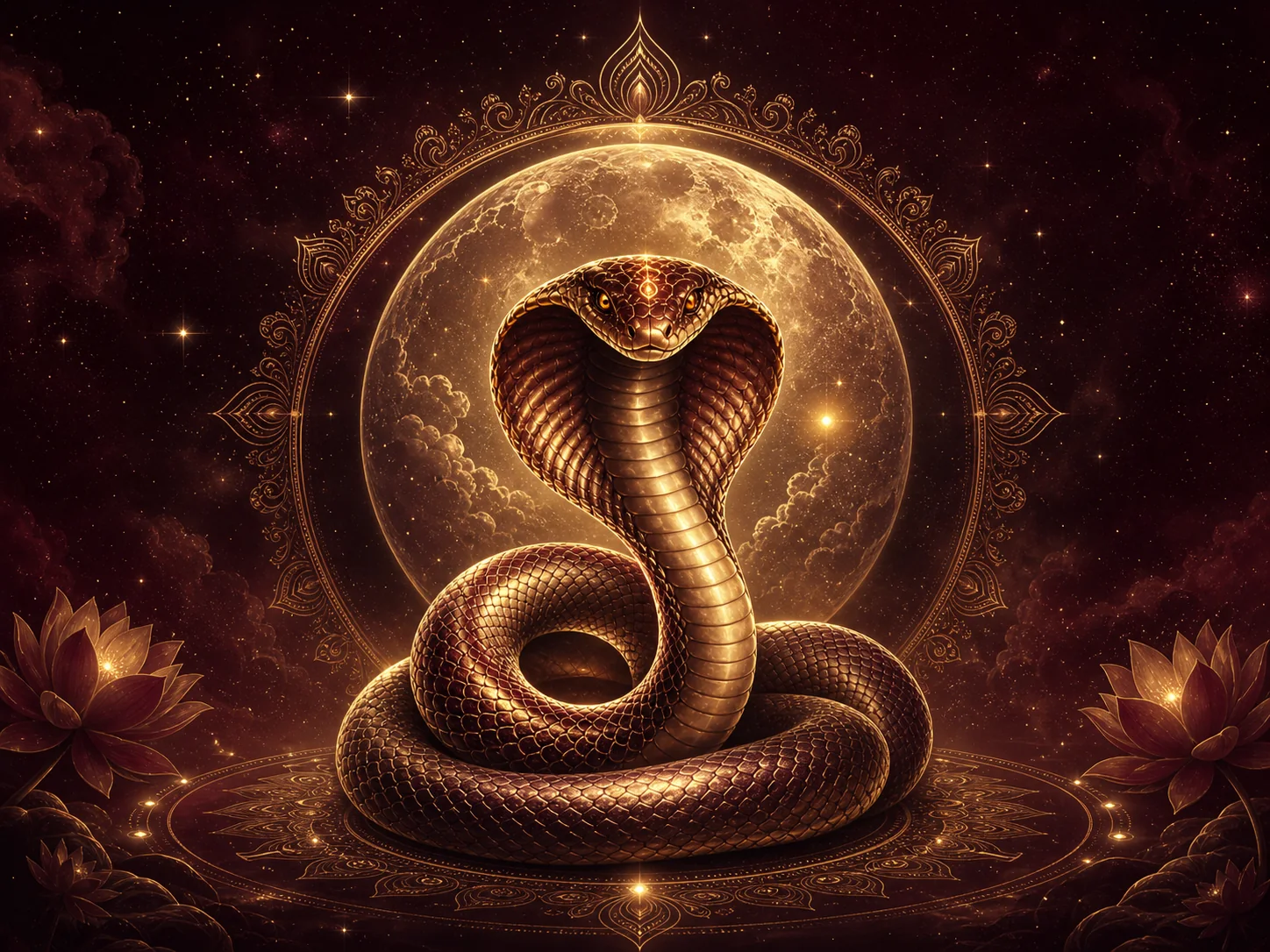
Ashlesha lies at the end of Cancer and is ruled by Mercury. Its symbol is the serpent, and its deity connection is with the Nagas. It represents hidden wisdom, psychological depth, binding, strategy, and emotional entanglement. Magha begins Leo and is ruled by Ketu. It is connected with the Pitris, the ancestral forces, and carries dignity, lineage, authority, and throne energy.
The Ashlesha Magha gandanta is one of the most psychologically intense junctions. It moves from emotional holding to ancestral identity. A person born here may feel strongly tied to family karma, parental patterns, or inherited responsibilities. There can be a need to separate emotional loyalty from true dharma.
This placement can produce remarkable insight into human motives. The person may understand hidden dynamics quickly. The challenge is to avoid emotional manipulation, fear, or over attachment, and instead use insight for healing and leadership.
Jyeshtha Mula Gandanta: From Control to Root Truth
Jyeshtha lies at the end of Scorpio and is ruled by Mercury. It is associated with seniority, protection, power, secrecy, and responsibility. Mula begins Sagittarius and is ruled by Ketu. Its deity is Nirriti, and its symbol is the root. Mula seeks the root truth, even if it must pull away illusions.
The Jyeshtha Mula junction is a deep karmic gateway. It moves from Scorpio intensity to Sagittarian truth. People born here may be forced to confront power, fear, loss, or hidden family patterns early in life. Yet this same placement can give extraordinary courage to investigate the root cause of suffering.
This gandanta can make a person philosophical, fearless, research oriented, and spiritually serious. The lesson is to move from control to surrender, from suspicion to wisdom, and from survival to dharma.
Gandanta Birth: What It Can Indicate
A gandanta birth is traditionally noted for caution because the Moon or lagna in this zone can show vulnerability during early life. In older texts and family traditions, special attention was often given to the child, mother, health, rituals, and naming.
In a modern reading, the following areas are examined carefully:
- Is the Moon in gandanta?
- Is the lagna in gandanta?
- Is the lagna lord strong?
- What is the Moon’s dignity and support?
- Are benefic aspects present?
- What dasha was running at birth?
- Is the gandanta planet supported in the navamsa?
- Are there protective yogas in the chart?
This is important because no single placement should be judged alone. A Moon in gandanta with strong Jupiter influence may give wisdom and protection. A lagna in gandanta with a strong lagna lord may produce resilience after an unsettled beginning.
For accurate birth chart analysis, you can generate your free kundli and check the exact Moon degree, lagna degree, and nakshatra pada.
Moon in Gandanta
The Moon is the most commonly discussed planet in gandanta because it represents the mind and early emotional life. A gandanta Moon may indicate a person who feels everything deeply. The emotional body may be sensitive, reactive, or unusually perceptive.
Such natives often carry impressions that are difficult to explain logically. They may feel connected to family karma, ancestral stories, or spiritual practices from childhood. At times, they may struggle with emotional security, but with maturity they can become compassionate guides for others.
The Moon in gandanta should be read with its sign, nakshatra lord, house placement, aspects, tithi, and dasha. A well supported Moon can turn this sensitivity into devotion, healing, poetry, counselling, teaching, or spiritual understanding.
Lagna in Gandanta
When the lagna falls in gandanta, the karmic knot becomes connected to the body, personality, and life direction. Such people may feel they are constantly reinventing themselves. Their early life may involve changes in family circumstances, identity, place, health, or confidence.
A gandanta lagna can make the person appear intense, unusual, private, or spiritually marked. They may not fit simple social expectations. Over time, they often discover that their life path is not ordinary. They are meant to pass through inner thresholds and help others do the same.
The strength of the lagna lord becomes very important. If the lagna lord is strong by sign, house, aspect, or varga support, the person can rise powerfully despite early instability.
Are Gandanta Nakshatras Bad?
No, gandanta nakshatras are not bad. They are sensitive. There is a major difference.
Fear based astrology treats every difficult placement as a curse. Classical Jyotish is more refined. It recognises that certain birth points need care, awareness, and remedies. Gandanta is one such point.
A person born in gandanta may have:
- Deep karmic memory
- A strong spiritual calling
- Unusual emotional intelligence
- Ability to survive major transitions
- Interest in mantra, tantra, yoga, psychology, or healing
- Capacity to break family patterns
The same placement that gives early sensitivity can later give mastery. The knot becomes wisdom when it is patiently untied.
Remedies for Gandanta Birth
Remedies should be chosen after examining the full chart. Still, certain gentle and sattvic practices are traditionally helpful for gandanta related sensitivity.
Spiritual and practical remedies
- Worship of the nakshatra deity or family deity
- Mantra japa for the Moon, lagna lord, or nakshatra lord
- Charity on the weekday connected to the affected planet
- Respectful service to parents, elders, teachers, and ancestors
- Peaceful rituals during difficult dashas or transits
- Maintaining emotional discipline through prayer, meditation, and breath
- Avoiding impulsive decisions during emotionally charged periods
For a child born in gandanta, families traditionally consult an astrologer for shanti rituals and naming guidance. The purpose is not fear. It is to bless the child and harmonise the entry into life.
If your chart shows Moon or lagna in gandanta, it is wise to talk to an astrologer before assuming anything negative. The same degree can operate differently depending on the full horoscope.
Timing Awareness: Dashas and Transits Matter
Gandanta does not produce the same result every day of life. Its effects become more visible during certain periods.
Pay attention to:
- Dasha or antardasha of the gandanta planet
- Dasha of the nakshatra lord
- Major Saturn, Jupiter, Rahu, and Ketu transits over the Moon or lagna
- Transits through the same gandanta zone
- Sensitive muhurta choices for major life events
For daily spiritual timing, festivals, tithis, and nakshatra awareness, you may also follow today's panchang. Panchang does not replace birth chart analysis, but it helps align actions with cosmic rhythm.
The Higher Purpose of Gandanta
The deeper purpose of gandanta is release. A person born here often carries a story that cannot be solved only by outer achievement. There is an inner knot to be seen, respected, and slowly opened.
At Revati Ashwini, the soul learns to leave the past and begin again.
At Ashlesha Magha, the soul learns to transform emotional binding into noble lineage and self respect.
At Jyeshtha Mula, the soul learns to release control and seek the root truth.
This is why many evolved seekers, healers, teachers, artists, and reformers may have strong gandanta signatures. Their lives may not be simple, but their insight can become rare.
How to Read Gandanta Correctly
A mature astrologer does not stop at the word gandanta. The full reading must include house ownership, dignity, aspects, yogas, dashas, divisional charts, and the practical life context of the native.
A balanced interpretation asks:
- Which planet is in gandanta?
- Is it Moon, lagna, lagna lord, or another graha?
- Is the planet benefic or malefic functionally for the chart?
- Is it supported by Jupiter, Venus, or a strong lagna lord?
- Is the nakshatra lord strong or afflicted?
- What dasha brought the issue into experience?
- Has the native already transformed the pattern through maturity?
Without these steps, gandanta interpretation becomes incomplete. With these steps, it becomes a powerful tool for understanding the soul’s transition.
Frequently Asked Questions
What is gandanta nakshatra?
A gandanta nakshatra refers to birth in the sensitive junction between water and fire signs, especially around Revati Ashwini, Ashlesha Magha, and Jyeshtha Mula. The exact degree is important.
Is gandanta birth unlucky?
No. Gandanta birth is sensitive, not automatically unlucky. It may show early challenges, karmic intensity, or emotional depth, but it can also produce spiritual maturity and resilience.
Which planets matter most in gandanta?
The Moon and lagna are most important. The Moon shows the mind and early emotional life, while the lagna shows body, identity, and life direction. Other planets should also be judged if they occupy the gandanta zone.
What is the gandanta degree range?
The gandanta zone is the last 3 deg 20 min of a water sign and the first 3 deg 20 min of the next fire sign. This occurs at Pisces Aries, Cancer Leo, and Scorpio Sagittarius.
Can remedies reduce gandanta effects?
Yes, remedies can support balance, especially when chosen according to the full birth chart. Mantra, charity, deity worship, ancestor respect, and shanti rituals are commonly used.
Should I be worried if my child is born in gandanta?
Do not panic. Give care, blessings, and proper guidance. Consult a qualified astrologer for the full chart, because strength, benefic aspects, dashas, and protective yogas can greatly change the interpretation.
Conclusion
Gandanta is one of the most profound ideas in Vedic astrology. It shows the soul at a crossing point, where old emotional waters meet the fire of a new destiny. A gandanta nakshatra birth may bring sensitivity, intensity, and karmic themes, but it also carries the possibility of deep healing and spiritual refinement.
The right approach is neither fear nor denial. It is awareness. When the knot is seen clearly, it can be untied with patience, remedies, self knowledge, and dharmic living. In that sense, gandanta is not a curse. It is a sacred transition.