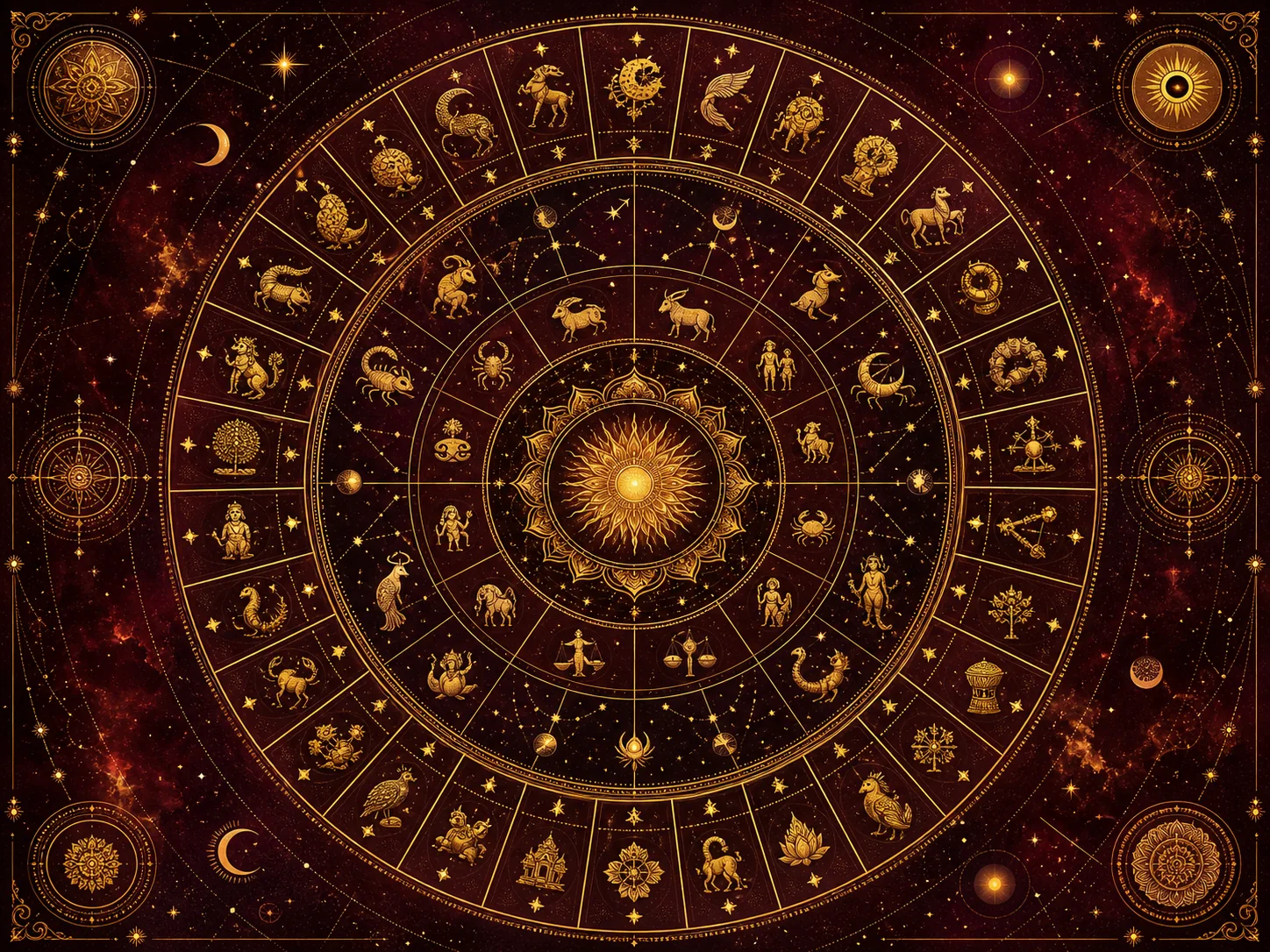
Neecha Bhanga: How a Debilitated Planet Becomes Powerful
Neecha Bhanga explains how a debilitated planet can recover strength, mature through struggle, and sometimes create a powerful Raja Yoga in the birth chart.
Neecha Bhanga occurs when the chart gives a debilitated planet a valid classical mechanism of recovery, usually through its sign lord, the lord of its exaltation sign, or a strong angular relationship. The planet does not become magically flawless; its weakness is checked, redirected, and sometimes converted into exceptional competence because the native learns to master the field that first felt difficult. It becomes Neecha Bhanga Raja Yoga only when that recovery is tied to strong houses, capable lords, and an activating dasha that can produce visible rise.
What does Neecha Bhanga actually mean?
Neecha means fallen or debilitated, while bhanga means breaking, cancellation, or interruption. In a Vedic birth chart, a planet is debilitated when it occupies the sign in which its natural mode of functioning is least comfortable. The Sun is debilitated in Libra, the Moon in Scorpio, Mars in Cancer, Mercury in Pisces, Jupiter in Capricorn, Venus in Virgo, and Saturn in Aries.
Debility is not destruction. It describes a mismatch between a planet’s nature and the environment through which it must act. Mars wants decisive motion, but Cancer makes action emotionally protective and changeable. Jupiter seeks meaning and expansion, while Capricorn asks it to prove every belief through structure, limits, and practical accountability.
This is why a software label cannot finish the interpretation. The sign lord, house ownership, house occupied, aspects, conjunctions, divisional dignity, combustion, planetary war, avastha, Shadbala, and dasha context decide whether the placement remains compromised or develops unusual strength.
How does a debilitated planet turn weakness into power?
A debilitated planet turns weakness into power when another part of the chart restores the support it lacks. The most common source is the dispositor, the ruler of the sign containing the planet. If that ruler is strong and placed in an angle, it can organise and channel the fallen planet. Another source is the ruler of the sign where the planet would be exalted, representing the environment in which that planet performs at its highest level.
Think of the debilitated planet as a skilled person working in an unfamiliar institution. If the institution’s head is capable and well placed, the person gains resources and direction. If the head is weak, hidden, or severely afflicted, the talent remains harder to express. Cancellation therefore belongs to a network, not to the isolated planet.
“Neecha Bhanga does not erase the difficult beginning; it shows that the chart contains a route through it.”
Many people with genuine cancellation remember early uncertainty around the planet’s themes. A debilitated Sun may first show discomfort with authority or recognition. A cancelled Sun can later produce mature leadership because the person had to build an inner centre rather than inherit confidence easily. A cancelled Saturn may still bring delay, but the delay can produce durable competence and institutional authority.
Which classical conditions should you check?
The clearest classical treatment is associated with the Raja Yoga discussion in Phaladeepika, particularly the passages traditionally grouped under Neecha Bhanga Raja Yogas. Its core logic gives importance to angular placement from the ascendant or Moon and to the planets connected with the debilitation and exaltation signs. The English translation ofPhaladeepikaby V. Subrahmanya Sastri is useful for checking the text rather than relying on abbreviated internet lists.
The first condition to examine is whether the lord of the sign occupied by the debilitated planet is in a kendra—the first, fourth, seventh, or tenth house—from the ascendant or Moon. A fallen Jupiter in Capricorn, for example, receives cancellation support if Saturn is angular from either reference point.
The second condition is whether the lord of the sign in which the debilitated planet would be exalted occupies a kendra from the ascendant or Moon. For Jupiter in Capricorn, Jupiter’s exaltation sign is Cancer, ruled by the Moon. A strong, angular Moon therefore becomes part of the recovery mechanism.
A further classical pattern concerns the planet that is exalted in the sign where the debilitated planet sits. Mars is exalted in Capricorn; therefore, with Jupiter debilitated there, a strong and angular Mars can contribute to the cancellation structure. Traditional commentators differ in how broadly they combine these formulations, so a responsible reading identifies the exact rule being used rather than merely announcing “Neecha Bhanga present.”
Direct association or aspect from the dispositor, mutual angularity between the relevant sign lords, and recovery in the Navamsha are also used in established practice. They are best treated as reinforcing factors unless the classical formulation is clear. A planet exalted or in its own sign in D-9 can recover inner capacity, but the D-9 should confirm the natal promise, not replace it. The role of divisional charts is explored further in our guide to the D-9 Navamsha.
BPHS supplies the larger Parashari framework for judging dignity, house lordship, yogas, strength, and dasha results. Because surviving editions and chapter arrangements vary, it is wiser to cite its general framework than invent a precise verse number. A published English edition ofBrihat Parashara Hora Shastra is useful for comparing these foundational rules.
When does cancellation become a Raja Yoga?
Not every cancellation is a royal combination. Sometimes debility is simply reduced: the planet becomes workable or mixed instead of severely weak. The term Raja Yoga should be reserved for charts in which the cancellation also connects with power-bearing houses and lords.
The strongest cases usually involve the ascendant, fifth, ninth, tenth, or another kendra, with the relevant planets possessing real strength. A debilitated ninth lord in the tenth whose dispositor is exalted in a kendra can create a route from difficulty into status. A debilitated sixth or eighth lord may have its weakness cancelled, yet its period can still emphasise disputes, illness, debt, research, crisis management, or transformation because house ownership remains active.
Natural beneficence is not enough. Parashari judgment begins with functional lordship for the ascendant. The planet must also be able to deliver: it should not be rendered ineffective by severe combustion, damaging planetary war, a badly weakened dispositor, or repeated affliction across the natal and divisional charts. For one of those modifying factors, see what combustion does to a planet.
A Jaimini reading may confirm prominence through chara karakas, rashi drishti, argala, or the strength of the relevant signs. It should not be used to manufacture a cancellation that the Parashari dignity structure does not support.
How do you read Neecha Bhanga in a chart?
Begin with the planet’s actual job. Note its natural significations, the houses it owns, the house it occupies, and the houses it aspects. Then identify the dispositor and the lord of the planet’s exaltation sign. Judge whether either is angular from the ascendant or Moon and whether they are strong by sign, house, aspect, and divisional confirmation.
Next, ask what kind of recovery is promised. If the dispositor is powerful but the debilitated planet owns difficult houses, the native may become excellent at solving difficult problems rather than receiving effortless luck. If the planet owns a trine and occupies a kendra, the same mechanism can produce learning, authority, reputation, or institutional advancement. The chart must be read house by house, not by yoga label alone; this kundli-reading guide explains that sequence.
Finally, judge the ascendant and Moon. A yoga cannot carry the whole horoscope if the chart’s basic vitality and mental coherence are unsupported. Strong reference points help the person use the recovered planet consciously; weak ones may still permit achievement, but with more internal strain.
Worked example: Jupiter in Capricorn for Aries rising
Consider an Aries ascendant with Jupiter at 12° Capricorn in the tenth house, Saturn at 22° Libra in the seventh house, and the Moon at 18° Cancer in the fourth house. Jupiter is debilitated in Capricorn. It owns the ninth and twelfth houses and occupies the tenth, linking higher knowledge, mentors, distant institutions, and vocation.
Saturn is Jupiter’s dispositor because Saturn rules Capricorn. Saturn is exalted in Libra and placed in the seventh, a kendra from the ascendant. It is also in the fourth from the Moon, another kendra. The Moon adds a second cancellation channel: Jupiter is exalted in Cancer, and the Moon, ruler of Cancer, is in its own sign and angular from the ascendant. The chart therefore contains repeated structural support, not one loose technicality.
Early education or faith may feel constrained, interrupted, or overly practical. The person may distrust teachers or insist that wisdom prove itself through measurable results. Yet Jupiter, as ninth lord in the tenth, can eventually turn disciplined knowledge into professional authority. Exalted Saturn supplies organisation, patience, contracts, and institutional reach; the strong Moon supplies public responsiveness and a secure base.
This is a credible Neecha Bhanga Raja Yoga, not because “debilitated Jupiter becomes exalted,” but because a trinal lord in the tenth is rescued by powerful angular planets and tied to career. Even here, judgment remains conditional. Severe combustion, poor D-9 dignity, low Shadbala, or a weak ascendant lord would reduce the result.
When does Neecha Bhanga give results?
A natal yoga is a capacity; dasha is the permission to experience it. Results most often become visible in the mahadasha or antardasha of the debilitated planet, its dispositor, the lord of its exaltation sign, or a planet strongly joining the configuration.
In the worked example, Jupiter periods may bring teaching, advisory roles, qualifications, international exposure, or career expansion after a test of competence. Saturn periods may consolidate rank through responsibility, systems, administration, or long-term contracts. Moon periods may activate property, public visibility, education, family duties, or the emotional foundation required for professional growth.
Transits trigger; they do not create the yoga. A Jupiter or Saturn transit over the natal configuration, its houses, or its dasha lords can open an event window, but it cannot manufacture Neecha Bhanga in a chart that lacks it. Because the yoga is natal rather than year-bound, there is no universal 2026 activation date. Personal timing requires the chart, dasha balance, and relevant transit contacts.
What does Neecha Bhanga feel like in real life?
The recurring pattern is not “weak, then suddenly lucky.” It is closer to “tested, then technically capable.” The planet’s domain becomes an area in which the person develops method. Cancelled Mercury can produce a careful communicator who learned through correction or unconventional education. Cancelled Venus can produce refined relationship judgment after early idealisation or criticism. Cancelled Mars can produce disciplined courage after learning to manage anger, fear, or reactive action.
The rise may be public or private. Raja Yoga does not always mean celebrity or vast wealth. In classical language it points to command, recognition, influence, resources, or elevation relative to one’s starting conditions. In modern life, that may describe a respected surgeon, administrator, engineer, teacher, judge, entrepreneur, or family decision-maker.
When should you not worry about a debilitated planet?
Do not worry merely because an app displays “debilitated.” Concern is premature until the dispositor, lordship, aspects, Navamsha, strength measures, and dashas are checked. A debilitated planet can also participate in exchange, Raja Yoga, Viparita patterns, or other combinations that change how its results are delivered.
Avoid treating Rahu and Ketu exactly like the seven visible planets. Schools disagree about the nodes’ exaltation and debilitation signs. A confident claim of “Rahu Neecha Bhanga” may reflect a lineage rule, but it is not universal in the way Jupiter in Capricorn or Saturn in Aries is.
Birth-time accuracy also matters. A few minutes can change the ascendant degree, divisional placements, and dasha balance. Before making a major decision from a yoga, verify the chart and, where needed, consult an experienced Vedic astrologer.
What should you do if you have Neecha Bhanga?
Understand the planet’s training requirement. A cancelled Saturn asks for patience, accountability, and respect for time. A cancelled Mercury asks for precision, study, and honest communication. A cancelled Venus asks for discrimination without contempt, while a cancelled Mars asks for courage without impulsiveness. Behaviour aligned with the planet is often more useful than collecting remedies.
Do not wear a gemstone merely to “strengthen the debilitated planet.” Gemstones amplify a planet, including its house ownership and difficult tendencies. A planet whose debility is already cancelled may need better timing or disciplined use rather than crude strengthening. Mantra, charity, vrata, and devotional remedies should be selected from the whole chart and one’s tradition, not sold as emergency repairs.
Astrology is best used for guidance and reflection. It is not a substitute for medical, legal, financial, or psychological advice.
Does Neecha Bhanga remove all bad results?
No. It reduces or redirects debility, but the planet retains its house ownership, aspects, associations, and developmental history. Challenge may remain, especially early in life or during difficult sub-periods. What changes is the ability to use that field constructively.
Is Neecha Bhanga always stronger than exaltation?
No. Some classical descriptions praise the rise associated with cancellation, but that does not create a universal rule that a cancelled planet is better than an exalted one. An exalted planet can be afflicted or functionally difficult; a cancelled planet can be powerful yet internally demanding.
Can Navamsha alone cancel debilitation?
Navamsha strength is important confirmation, especially when the planet reaches its own or exaltation sign in D-9. It does not automatically erase a weak natal structure. The Rashi chart shows the main promise; divisional charts reveal depth, maturity, and specialised manifestation.
Can two debilitated planets cancel each other?
Sometimes two debilitated planets support each other through exchange, conjunction, aspect, or dispositor relationships, but “two weaknesses make one Raja Yoga” is not a rule. Each planet’s cancellation must be demonstrated independently before their combined house results are judged.
What is the final test of Neecha Bhanga?
The final test is whether the chart contains both recovery and delivery. Recovery comes from a valid classical cancellation mechanism. Delivery comes from strong lordship, supportive dignity, a capable ascendant, divisional confirmation, and the right dasha. When both are present, a fallen planet does not merely survive; it becomes the part of the chart that knows how to rise.