12 Houses in Astrology: Plain Meaning of Every Bhava
Learn the 12 houses in astrology with simple house meanings, bhava groups, karaka planets, and how each house is read in a birth chart clearly.
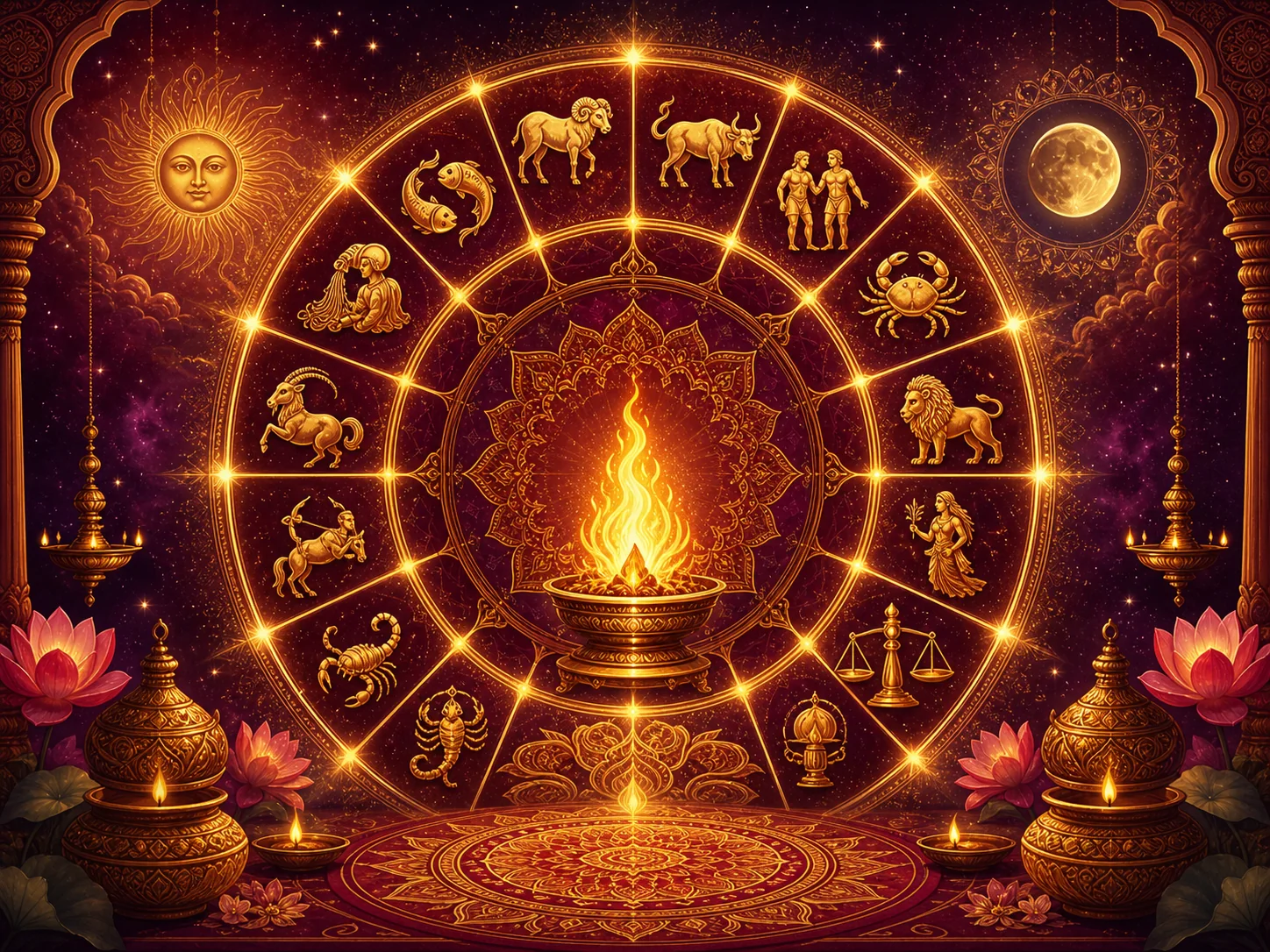
The 12 houses in astrology are the twelve life areas shown in a birth chart. In Vedic astrology, each house is called a bhava, meaning a field of experience. If planets are the actors and signs are their style, the houses show where the action happens: body, family, courage, home, children, health, marriage, longevity, fortune, career, gains, and liberation.
A good kundli reading does not judge one house in isolation. Each house is read through the sign placed there, the condition of the house lord, planets sitting in the house, aspects, yogas, dashas, and the strength of the lagna. This plain-language guide explains the basic house meanings, important house groups, and the planets that naturally support each bhava.
What Are Birth Chart Houses?
In a Vedic birth chart, the first house begins from the lagna, or ascendant. The lagna is the sign rising on the eastern horizon at birth. From there, the remaining eleven houses are counted in order.
Each house has three main layers:
- The house itself, which shows a life topic.
- The sign in that house, which shows the flavour or manner.
- The house lord, whose placement shows how that topic unfolds.
Planets placed in a house strongly influence that area of life. For example, Jupiter in the second house may support family values, speech, and wealth when strong and well placed. Saturn in the tenth may give slow but durable career growth when disciplined effort is present.
For a full chart, you can start with a free kundli and then study each house step by step.
Important House Groups in Vedic Astrology
Before learning each house, it helps to understand the major groups.
| House Group | Houses | Meaning |
|---|---|---|
| Kendras | 1, 4, 7, 10 | Pillars of life, action, stability |
| Trikonas | 1, 5, 9 | Dharma, blessings, wisdom, fortune |
| Dusthanas | 6, 8, 12 | Challenges, debts, obstacles, transformation |
| Upachayas | 3, 6, 10, 11 | Areas that improve through effort and time |
Kendras: The Pillars of Life
The kendra houses are the 1st, 4th, 7th, and 10th. They form the main structure of the chart. They relate to self, home, relationships, and career. Strong kendras often give visibility and practical strength.
Trikonas: Dharma and Grace
The trikona houses are the 1st, 5th, and 9th. They show intelligence, merit, faith, fortune, and the deeper purpose of life. Benefic planets in trikonas can give wisdom and protection.
Dusthanas: Challenge and Growth
The 6th, 8th, and 12th houses are called dusthanas. They may bring struggle, but they are not simply bad. They teach discipline, healing, surrender, and inner maturity.
Upachayas: Growth Over Time
The 3rd, 6th, 10th, and 11th houses are upachaya houses. Results here often improve with age, courage, skill, and consistent effort. Natural malefics like Mars, Saturn, Rahu, and the Sun can do well in upachayas when they are otherwise dignified.
1st House: Self, Body, Personality
The 1st house is the lagna bhava. It shows the body, appearance, vitality, temperament, self-image, and overall direction of life. It is the most important house because every other house is counted from it.
Key meanings:
- Body and health
- Personality and confidence
- Birth circumstances
- Life path
- General strength of the chart
The Sun can support authority and self-belief here. Mars may give energy and courage. Jupiter gives wisdom and protection. The lagna lord’s strength is extremely important. If the lagna and its lord are strong, the person usually has better capacity to handle other chart challenges.
2nd House: Family, Wealth, Speech
The 2nd house shows accumulated wealth, food habits, speech, family upbringing, values, and early education. It also relates to the face, mouth, and stored resources.
Key meanings:
- Savings and assets
- Family lineage
- Speech and voice
- Food and nourishment
- Moral values
Jupiter is a natural karaka for wealth, wisdom, and family values, so it can support this house when strong. Venus may give pleasant speech and refinement. Mercury can bring skill in communication and trade. Harsh influences may make speech sharp or finances unstable, but the full chart must be checked.
3rd House: Courage, Siblings, Effort
The 3rd house is the house of initiative. It shows courage, communication, hands, hobbies, writing, media, short journeys, and younger siblings.
Key meanings:
- Self-effort
- Courage and skills
- Younger siblings
- Communication
- Short travel
Mars does well here because it gives initiative and bravery. Mercury supports writing, speaking, marketing, and learning skills. Since this is an upachaya house, results can improve with practice. A person may not be naturally confident at first, but repeated effort builds strength.
4th House: Home, Mother, Inner Peace
The 4th house is a kendra and represents emotional foundation. It shows mother, home, property, vehicles, education, comforts, and inner peace.
Key meanings:
- Mother and emotional care
- Home and property
- Vehicles and comforts
- Basic education
- Mental peace
The Moon is a natural karaka for mother and emotional contentment. Venus supports comforts, vehicles, and beauty in the home. Mercury can help education. A strong 4th house gives grounding. If afflicted, the person may move often or struggle to feel emotionally settled.
5th House: Children, Intelligence, Purva Punya
The 5th house is a trikona and is considered highly auspicious. It shows intelligence, memory, creativity, mantra, children, romance, learning, and purva punya, the merit of past actions.
Key meanings:
- Children
- Education and intellect
- Creativity
- Mantra and devotion
- Romance and judgement
Jupiter is the natural karaka for children, wisdom, and higher learning, making it very important for this house. Mercury supports intelligence and study. Venus may enhance creativity and romance. The 5th house also plays an important role in spiritual practices and mantra siddhi.
6th House: Health, Debt, Enemies, Service
The 6th house is a dusthana and an upachaya. It shows illness, debts, disputes, enemies, competition, daily work, service, and discipline. Though challenging, it can produce strong results through effort.
Key meanings:
- Disease and recovery
- Debts and loans
- Enemies and competitors
- Service and routine
- Legal disputes
Mars can help fight obstacles here. Saturn can give endurance and discipline. Mercury may help in analytical service roles. A strong 6th house can make a person capable of defeating competition, handling pressure, and serving with patience.
7th House: Marriage, Partnership, Public Life
The 7th house is a kendra and shows marriage, spouse, business partnerships, contracts, sexuality, public dealings, and the way one relates to others.
Key meanings:
- Marriage and spouse
- Business partnerships
- Public image
- Agreements and contracts
- Desire and companionship
Venus is the natural karaka for marriage and relationships, especially for harmony, attraction, and mutual pleasure. Jupiter is also important for wisdom and dharma in marriage. The 7th house must be read carefully for compatibility, along with Venus, Jupiter, the 7th lord, navamsha, and dasha. For marriage analysis, kundli matching can be a useful starting point.
8th House: Longevity, Secrets, Transformation
The 8th house is a dusthana and one of the deepest houses in the chart. It shows longevity, sudden events, inheritance, hidden knowledge, research, occult studies, vulnerability, and transformation.
Key meanings:
- Longevity
- Sudden changes
- Inheritance
- Secrets and mysteries
- Deep transformation
Saturn is linked with longevity and endurance. Ketu may give interest in hidden knowledge and detachment. Jupiter’s influence can protect and guide through crises. The 8th house is not only about fear. It also shows the ability to survive, research, heal, and transform.
9th House: Dharma, Father, Fortune
The 9th house is a trikona and one of the most auspicious houses. It shows dharma, father, guru, blessings, higher wisdom, pilgrimage, ethics, fortune, and long-distance travel.
Key meanings:
- Dharma and faith
- Father and teachers
- Fortune and grace
- Higher learning
- Pilgrimage and ethics
The Sun is a karaka for father, authority, and dharma. Jupiter is the karaka for guru, wisdom, and blessings. A strong 9th house often gives guidance, protection, and moral clarity. When weak or afflicted, faith may be tested, but such tests can also deepen maturity.
10th House: Career, Karma, Status
The 10th house is the house of karma in the visible world. It shows profession, status, responsibility, authority, public life, and actions that shape reputation.
Key meanings:
- Career and work
- Public status
- Authority
- Karma and responsibility
- Recognition
The Sun is a karaka for authority and leadership. Saturn is important for work, duty, discipline, and long-term achievement. Mercury supports business, analysis, and communication. Mars gives action and technical ability. Since the 10th is both a kendra and an upachaya, it can become very strong through sustained effort.
11th House: Gains, Networks, Desires
The 11th house shows income from career, gains, networks, elder siblings, fulfilment of desires, social circles, and large organisations.
Key meanings:
- Income and gains
- Friends and networks
- Elder siblings
- Ambitions
- Fulfilment of desires
Jupiter is a natural karaka for gains and expansion. Mercury helps networking and commerce. Saturn may give slow but stable gains through systems, large groups, or long-term plans. The 11th is an upachaya, so income and influence often grow with time.
12th House: Loss, Sleep, Moksha
The 12th house is a dusthana, but also a spiritual house. It shows expenses, foreign lands, sleep, isolation, hospitals, ashrams, charity, bed comforts, and moksha.
Key meanings:
- Expenses and loss
- Foreign residence
- Sleep and dreams
- Isolation and retreat
- Moksha and surrender
Ketu supports detachment and spiritual withdrawal. Venus may give bed comforts and foreign pleasures. Jupiter can bring charity and spiritual guidance. The 12th house should not be seen only as loss. It can also show liberation from attachment.
Karaka Planets for the Houses
Karaka means a natural significator. A karaka planet represents a subject regardless of the house it owns in a specific chart.
Common examples include:
- Sun: father, authority, soul, 9th and 10th house matters
- Moon: mother, mind, emotional comfort, 4th house matters
- Mars: courage, siblings, land, conflict, 3rd and 6th house matters
- Mercury: speech, learning, trade, communication
- Jupiter: children, wisdom, wealth, gains, 2nd, 5th, 9th, and 11th house matters
- Venus: marriage, spouse, comforts, vehicles, 4th and 7th house matters
- Saturn: longevity, labour, discipline, sorrow, service, 6th, 8th, and 10th house matters
- Rahu: foreign elements, ambition, unusual rise, obsession
- Ketu: detachment, moksha, past-life impressions, spiritual insight
Karaka planets help confirm the reading, but they do not replace house lord analysis.
How to Read Any House Correctly
To read any bhava, follow a simple order.
First, see the house and its natural meaning. For example, the 7th house relates to marriage and partnerships.
Second, see the sign in that house. Aries brings a different style than Taurus or Pisces.
Third, judge the house lord. Where is it placed? Is it strong, weak, exalted, debilitated, combust, retrograde, or afflicted? Is it connected to benefic planets?
Fourth, see planets placed in the house. A planet sitting in a house directly colours that area.
Fifth, check aspects and yogas. Benefic aspects may protect. Harsh influences may create pressure or delay.
Finally, confirm through dasha and transit timing. A house may promise a result, but the result usually becomes active during the period of its lord, planets placed in it, or planets connected to it.
For a personal interpretation, it is better to talk to an astrologer rather than judge one placement alone.
A Mature Way to Understand House Meanings
The houses are not labels of good and bad fate. They are fields of karma. Some houses show ease, some show effort, and some show deep transformation. A strong 10th house may give career success, but without a stable 4th house, inner peace may still need work. A difficult 6th house may bring health struggles, but it can also create discipline and service-mindedness.
Similarly, dusthanas are not to be feared. The 6th teaches strength, the 8th teaches surrender and depth, and the 12th teaches release. Upachaya houses remind us that effort matters. Kendras give structure. Trikonas show blessings and purpose.
This balanced approach is the heart of serious Jyotish.
Frequently Asked Questions
What are the 12 houses in astrology?
The 12 houses in astrology are twelve areas of life in a birth chart. They show self, wealth, courage, home, children, health, marriage, longevity, fortune, career, gains, and moksha.
What is a bhava?
Bhava is the Sanskrit term for a house in Vedic astrology. Each bhava represents a field of life experience, such as family, education, marriage, or profession.
Which houses are most important in a birth chart?
All houses matter, but the 1st house and its lord are especially important because the entire chart is read from the lagna. Kendras and trikonas are also highly significant.
What are kendra and trikona houses?
Kendra houses are 1, 4, 7, and 10. They are the pillars of practical life. Trikona houses are 1, 5, and 9. They show dharma, wisdom, merit, and fortune.
Are dusthana houses always bad?
No. Dusthanas, which are 6, 8, and 12, can bring challenges, but they also support growth, healing, spiritual maturity, and the ability to overcome difficulty.
Which house shows career?
The 10th house is the main house of career, karma, status, and public responsibility. The 2nd, 6th, and 11th houses also support income, service, and gains.
Final Thoughts
The birth chart houses are the foundation of kundli interpretation. Once you understand the twelve bhavas, the chart becomes less mysterious and more meaningful. The 1st house shows who you are, the 4th shows where you feel rooted, the 7th shows how you relate, and the 10th shows what you do in the world.
Still, no house should be read alone. A correct reading includes the sign, house lord, planets placed there, aspects, yogas, dashas, and overall chart strength. When studied patiently, the houses do not create fear. They reveal the map of life, effort, grace, and growth.